
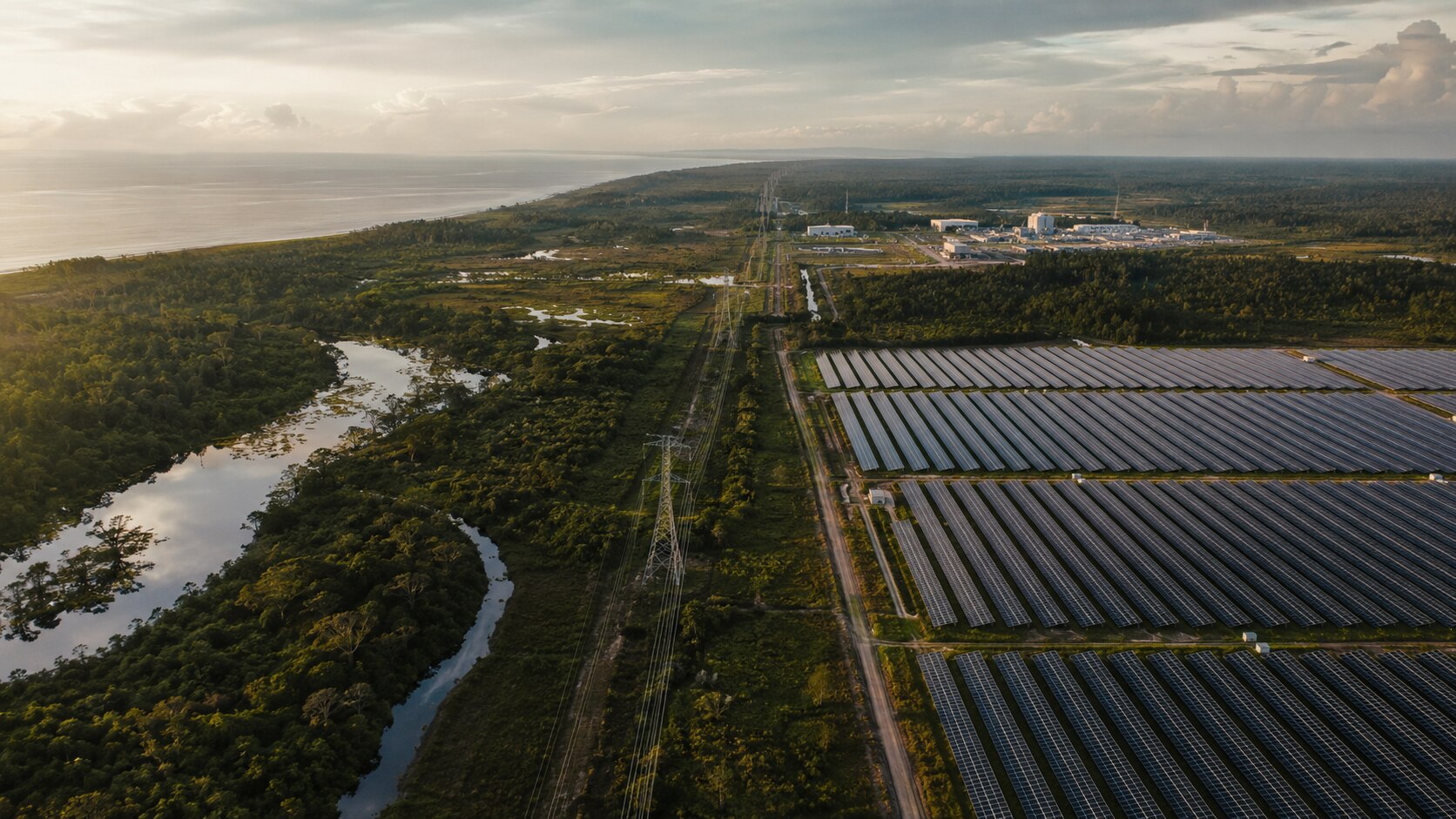
Impact is a development discipline, not a completed record.
Elementum is a development-stage platform. The pages below describe the diligence workstreams we intend to apply as projects advance, and the national value those projects are designed to create — not outcomes that have already been achieved, measured, or certified.
The national value pathway
How a single integrated platform is intended to convert generation capacity into domestic industrial capability. Each stage depends on the one before it.
- 01
Generation
Utility-scale renewable capacity developed to institutional standards.
- 02
Reliable power
Grid infrastructure that makes that capacity dependable for industry.
- 03
Domestic processing
Minerals processed in-country rather than exported raw.
- 04
Skilled work & export value
Qualified products, technical roles, and retained value.
Design intent for projects in development. No stage is represented as operating, delivered, or quantified.
Environmental, social, and governance workstreams.
The table distinguishes what is intended from what has been measured. Where the status reads intended workstream, the work is planned as part of project development and has not yet produced reported results.
Environmental
Site-level environmental characterization and impact management across the development cycle.
| Area | What it covers | Approach | Status |
|---|---|---|---|
| Impact assessment | Land, water, biodiversity, and cumulative effects at each site. | Independent environmental and social impact assessment ahead of construction commitment. | Intended workstream |
| Emissions | Construction and operating emissions across the platform. | Baseline and inventory methodology to be established at project definition. | Not yet measured |
| Water & waste | Process water demand and residue management in mineral processing. | Process selection screened against water and residue management requirements. | Intended workstream |
Social
Community engagement, workforce development, and local participation as project design inputs.
| Area | What it covers | Approach | Status |
|---|---|---|---|
| Stakeholder engagement | Communities affected by siting, access, and construction activity. | Structured engagement and grievance process aligned to project development stages. | Intended workstream |
| Employment | Local hiring, skills transfer, and technical training capacity. | Workforce plans developed with EPC partners at project definition. | Not yet measured |
| Health & safety | Construction and operating safety performance. | Contractor HSE requirements embedded in procurement and contracting. | Intended workstream |
Governance
Decision rights, disclosure discipline, and the diligence standards lenders expect.
| Area | What it covers | Approach | Status |
|---|---|---|---|
| Project approvals | Discipline of investment and construction decisions. | Stage-gated development process with defined approval criteria at each gate. | In place |
| Diligence standards | Alignment with lender expectations for emerging-market infrastructure. | IFC Performance Standards and Equator Principles used as intended diligence frameworks. | Intended framework |
| Disclosure | Accuracy of public statements about project status. | Development-stage language applied consistently across public materials. | In place |
References to the IFC Performance Standards and the Equator Principles describe diligence frameworks Elementum intends to apply. They are not certifications, accreditations, or confirmations of alignment, and no third party has assessed Elementum against them.