
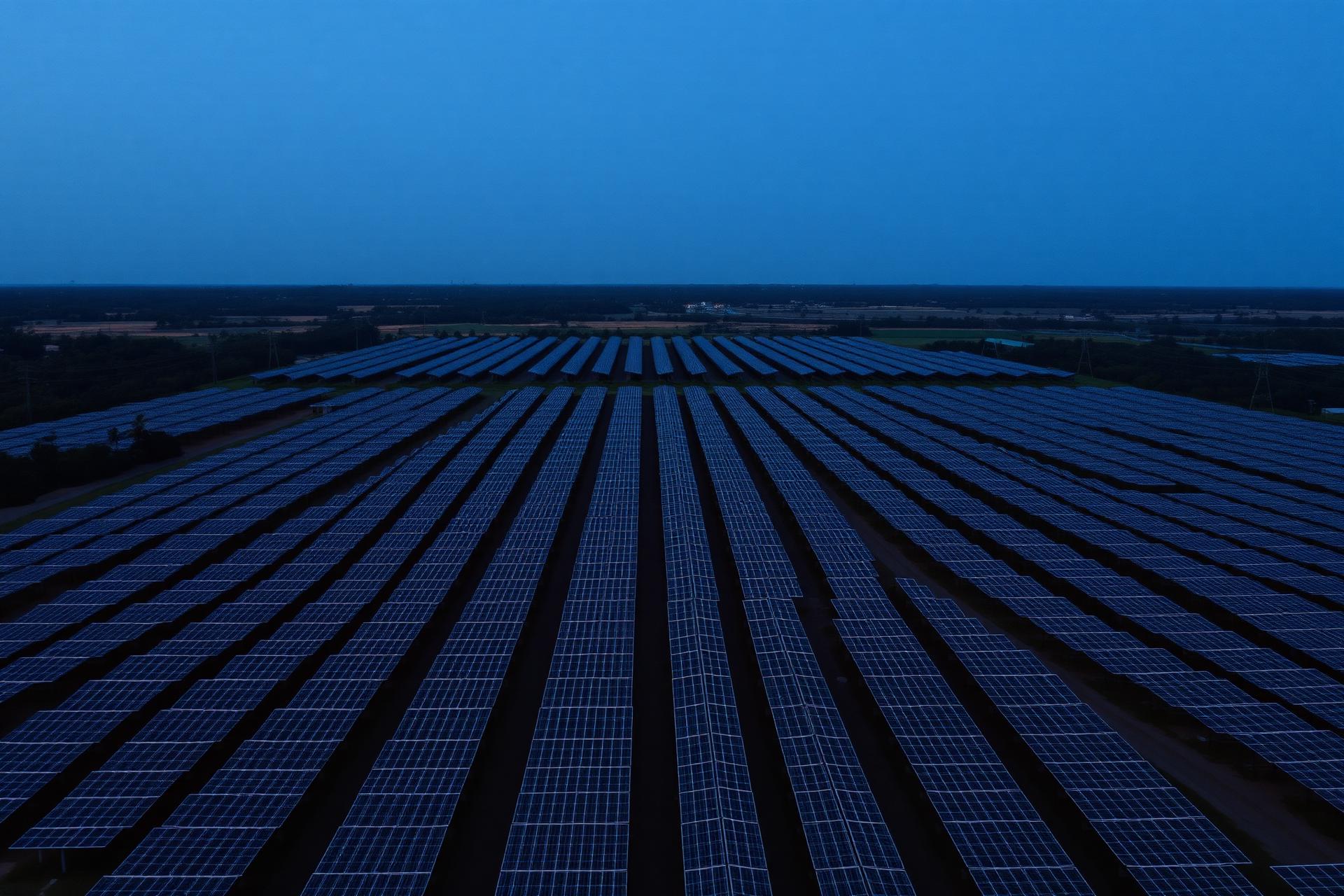
Powering the Industrial Economy.
Elementum develops utility-scale renewable energy infrastructure that strengthens national grids, supports industrial electrification, and provides the foundation for long-duration economic growth across Guyana.
Renewable generation is foundational infrastructure.
Utility-scale solar has become the lowest-cost new-build generation in most emerging markets and forms the base layer of any modern electricity system. Paired with storage and modernized transmission, it displaces thermal capacity, stabilizes national supply, and enables industrial electrification without exposing the economy to volatile fuel imports.
- Utility-scale generation designed for grid stability and long-duration cash flow.
- Storage integration to firm variable output and provide grid services.
- Anchor customer offtake from utility, government, and industrial partners.
- Structured for institutional equity, development finance, and export credit support.
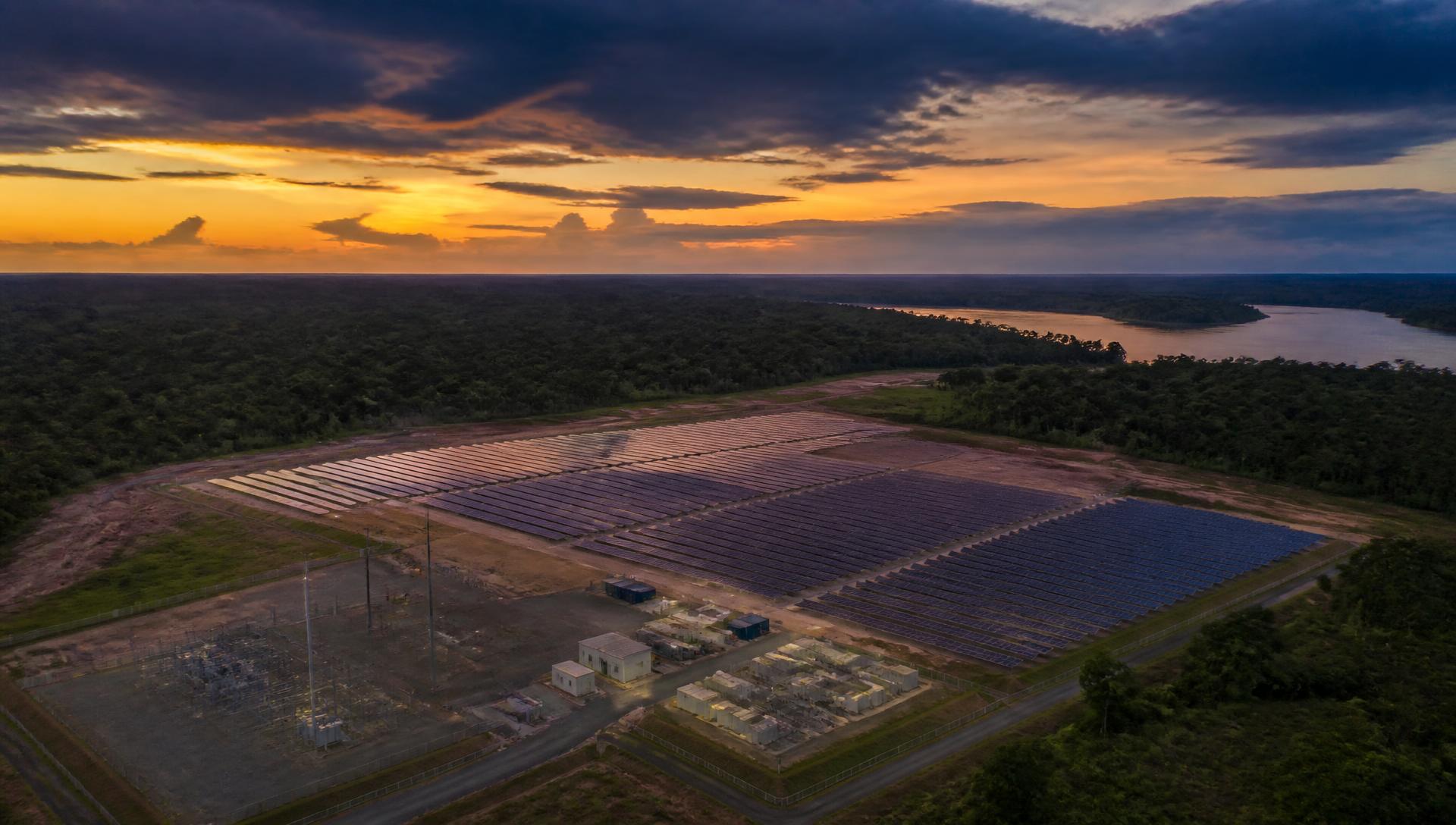
Elementum's strategy across the energy stack.
Elementum originates and evaluates development-stage utility-scale renewable generation and storage concepts against the potential for creditworthy utility and industrial offtake. No power purchase agreement or offtake is secured. Projects are shaped so that, if they advance, they would reinforce Grid Modernization and downstream mineral processing.
Elementum's current solar portfolio is development-stage. No power purchase agreement, tariff, interconnection agreement, permit, EPC contract, financing, or commercial operation date has been finalised, and no energy yield or operating output is represented.
Solar development portfolio composition
Indicative site allocation across the 165 MWac solar development portfolio. These are development-stage capacities under study; none are under construction or in operation.
- Berbice
- 60 MWac
- Development stage
- Linden
- 45 MWac
- Development stage
- Essequibo
- 35 MWac
- Development stage
- Demerara
- 25 MWac
- Development stage
Total 165 MWac · Development portfolio — as of July 2026
Figures are Elementum development-stage planning capacities and are subject to change through resource, interconnection and permitting work.
Stage-gated development sequence
Each gate must be cleared before the next commitment is made. The sequence describes how Elementum develops solar projects; it does not indicate that any gate has been passed on any specific site.
- 01
Origination & site control
Site screening, land access discussions, and early technical review.
- 02
Resource & interconnection studies
Solar resource assessment and network studies with the utility.
- 03
Permits & stakeholder engagement
Environmental scoping, consents pathway, and community engagement.
- 04
Commercial structuring
Offtake and contract structuring discussions with counterparties.
- 05
Financing & notice to proceed
Capital formation and conditions precedent ahead of construction.
Development-stage sequence. No completed stage is implied for any site in the portfolio.
Key diligence workstreams
The workstreams Elementum is running or intends to run on this platform. Listing a workstream does not mean it is complete.
- Technical
- Solar resource dataSite layout and yield modellingGrid injection point review
- Commercial
- Offtake structuringEquipment and EPC market testingCost benchmarking
- Consenting
- Environmental scopingLand and access rightsStakeholder engagement plan
Global energy analysts continue to identify utility-scale solar and storage as the fastest-growing new-build capacity, with development finance institutions and export credit agencies actively expanding balance sheets for emerging-market renewables. Grid readiness and transmission, not generation cost, remain the decisive constraints.
How this platform connects to the rest of the system.
Enabling infrastructure that delivers renewable generation to industrial demand.
A conceptual renewable-powered manufacturing campus representing potential future downstream demand only.
Engage with Elementum on the Utility-Scale Solar Generation.
Elementum welcomes conversations with institutional investors, development finance institutions, government stakeholders, industrial offtakers, and strategic EPC partners.