
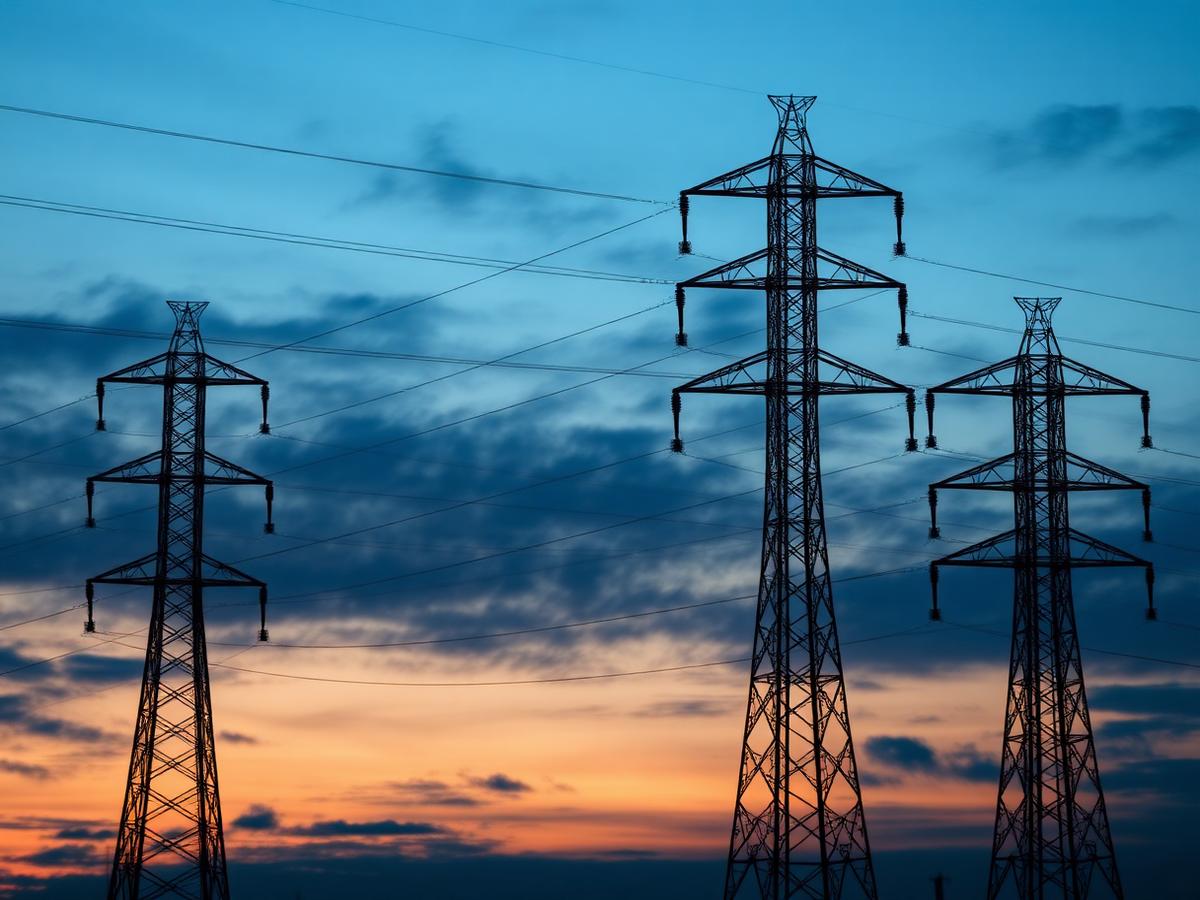
Energy Infrastructure
Building the electrical infrastructure that powers renewable generation and industrial development.
Grid interconnection, transmission, battery storage, and industrial power systems — the enabling platform for utility-scale renewables and silica and bauxite processing.
Executive summary
Energy infrastructure — grid, transmission, substations, storage, and industrial power systems — is the enabling platform behind every megawatt of renewable generation and every ton of value-added mineral processing. Without it, utility-scale solar cannot reach load and silica and bauxite processing cannot operate at globally competitive cost.
For institutional investors, energy infrastructure combines the risk profile of long-duration regulated assets with the tailwinds of decarbonization and industrial electrification. It is not a standalone business line for Elementum — it is the connective tissue that makes renewable generation and downstream industrial processing possible.
IMF Article IV consultations describe Guyana's sustained public investment program in energy and industrial infrastructure as a central driver of medium-term growth. World Bank and Reuters reporting continues to identify grid readiness, transmission capacity, and industrial power as the decisive constraints on renewable deployment and downstream processing in emerging markets.
A strategic platform for energy infrastructure.
Guyana's rapidly growing economy, aging thermal generation base, and national commitment to grid modernization create a supportive policy context for energy infrastructure investment. Transmission expansion, utility interconnection, and industrial power are the immediate bottlenecks between renewable generation and downstream industrial demand.
How Elementum develops energy infrastructure.
We develop the substations, transmission upgrades, utility interconnections, battery storage, and industrial power systems that enable Elementum's renewable generation and industrial processing platform — structured for long-duration institutional capital and integrated with the assets they serve.
Expansion of resilient transmission, distribution, and control-system infrastructure supporting renewable generation and industrial load growth.
Efficient integration of new utility-scale renewable assets into the national grid — the decisive constraint on renewables deployment.
Reliable, cost-competitive power infrastructure enabling value-added silica and bauxite processing.
Flexible firming capacity supporting grid stability, renewable penetration, and industrial reliability.
Transmission and substation investments that unlock utility-scale solar and firm renewable capacity.
Domestic renewable-powered generation reducing dependence on imported thermal fuels.
Curated market intelligence from trusted international sources.
Summaries only — full reporting remains with the original publishers.
IMF Article IV: Guyana's public investment program a growth engine
IMF Article IV consultations describe Guyana's sustained public investment program in energy and industrial infrastructure as a central driver of medium-term growth.
World Bank on grid modernization as a decisive lever
World Bank infrastructure reports emphasize that transmission, distribution, and control-system investment — not generation alone — determines whether renewables translate into reliable industrial power.
Reuters on rising industrial electricity demand
Reuters reporting details growing industrial electricity demand across the Americas driven by industrialization and electrification of manufacturing.
Go-Invest sector-based investment incentives
Guyana's investment promotion agency publishes sector-based incentive packages covering energy and industrial infrastructure investment.
Utility-Scale Solar Interconnection
Substation, transmission, and interconnection infrastructure enabling grid-connected renewable generation.
Industrial Power Infrastructure
Dedicated transmission and power systems serving silica and bauxite processing anchor loads.
Institutional research library.
Permanent industry references from the World Bank, IFC, IMF, USGS, OECD, the World Economic Forum, and leading industry bodies — curated to remain useful across investment and development cycles.
PPP Knowledge Lab
Reference platform for public–private partnership design, procurement, and delivery in infrastructure.
PPI Database
Private Participation in Infrastructure database — transaction-level data across energy and infrastructure PPPs.
Energy
Global research and project pipeline covering transmission, distribution, and grid investment.
Global Infrastructure Hub
G20-backed platform for infrastructure investment benchmarks, tools, and case studies.
Infrastructure Special Reports
S&P Global research covering transmission investment, storage buildout, and utility-scale infrastructure capital.
Current developments.
Timely coverage from trusted publishers — S&P Global Commodity Insights, Mining.com, Engineering News-Record, Financial Times Energy, Bloomberg Energy, IMF News, World Bank Blogs, USGS Updates, Reuters topic stories, Global Infrastructure Hub, the International Aluminium Institute, and Glass for Europe. Sorted by publication date; the feed is designed to be extended without changing this page.
Elementum's team continuously monitors institutional coverage of this sector. New market intelligence will surface here as material developments emerge.
Investor & partner questions.
Utility-scale solar and storage only reach load through transmission and substation capacity. Grid readiness — not generation cost — is the decisive constraint on renewable deployment in emerging markets.
Storage firms intermittent renewable output, provides ancillary services to the grid, and enables higher renewable penetration without compromising reliability for industrial loads.
Substations step transmission voltage down to the levels required by silica and bauxite processing, and manage the grid interface that determines cost, reliability, and expandability of industrial operations.
Both are energy-intensive. Renewable-powered transmission, substations, and industrial power systems lower unit energy cost, reduce fuel-price exposure, and cut the embedded carbon intensity of the exported materials.
Transmission determines where renewable generation can be sited, how quickly it can be built, and whether it can serve creditworthy industrial offtakers. It is often the critical path in project timelines.
We develop energy infrastructure in coordination with the national utility and regulator — structuring interconnection, PPAs, and operating agreements that meet institutional standards on both sides.